A washer that won't drain properly can quickly turn into a frustrating mess — especially when you open the door and find standing water still inside the drum. In many Ottawa homes, this is one of the most common washing machine problems we see, particularly in busy households where laundry runs daily.
Sometimes the issue is something relatively simple, like a clogged drain hose or blocked filter. In other cases, the problem may involve the drain pump, electrical components, or internal washer parts that require professional diagnosis.
The good news is that there are a few safe things homeowners can check before calling for service. In this guide, we'll explain the most common reasons a washer may stop draining, what you can safely inspect yourself, and when it's better to contact a washer repair technician.
Quick Answer
If your washer is not draining, start by checking the drain hose for kinks or clogs, clearing the pump filter if your model has one, and making sure the household drain is not backing up. If water remains after those checks, or you hear humming or grinding during the drain cycle, the drain pump or a control component may have failed — that is when professional diagnosis is the safest next step.
Common Symptoms
- Standing water left in the drum after the cycle finishes
- Washer stops mid-cycle with an error code or flashing lights
- Clothes are still soaking wet even though the cycle completed
- Unusual humming, clicking, or grinding sounds during draining
- Water leaking from the front, back, or bottom of the machine
Before You Start Troubleshooting
Before checking your washer, unplug the appliance and avoid touching any standing water near electrical components. Even a simple draining issue can sometimes involve damaged wiring, a failing pump, or internal electrical faults.
If the washer is leaking heavily, producing a burning smell, or repeatedly stopping mid-cycle, it's safer to avoid further use until the unit has been inspected.
⚠️ Warning: Unplug the washer before inspecting hoses or filters. Avoid touching standing water near electrical components.
1. Clogged or Kinked Drain Hose
One of the most common causes of draining problems is a clogged or kinked drain hose. Lint, small clothing items, soap residue, and debris can gradually restrict water flow and prevent the washer from draining properly.
In some cases, the hose may simply be bent behind the machine, especially after moving the washer or pushing it back too tightly against the wall. The hose must also be routed correctly — if it sits too low or loops upward incorrectly, gravity may not allow water to exit the drum.
2. Blocked Drain Pump or Filter
Drain pumps can become blocked by coins, socks, hairpins, or other small objects left in pockets during the wash cycle. When this happens, the washer may struggle to remove water or make unusual noises during draining.
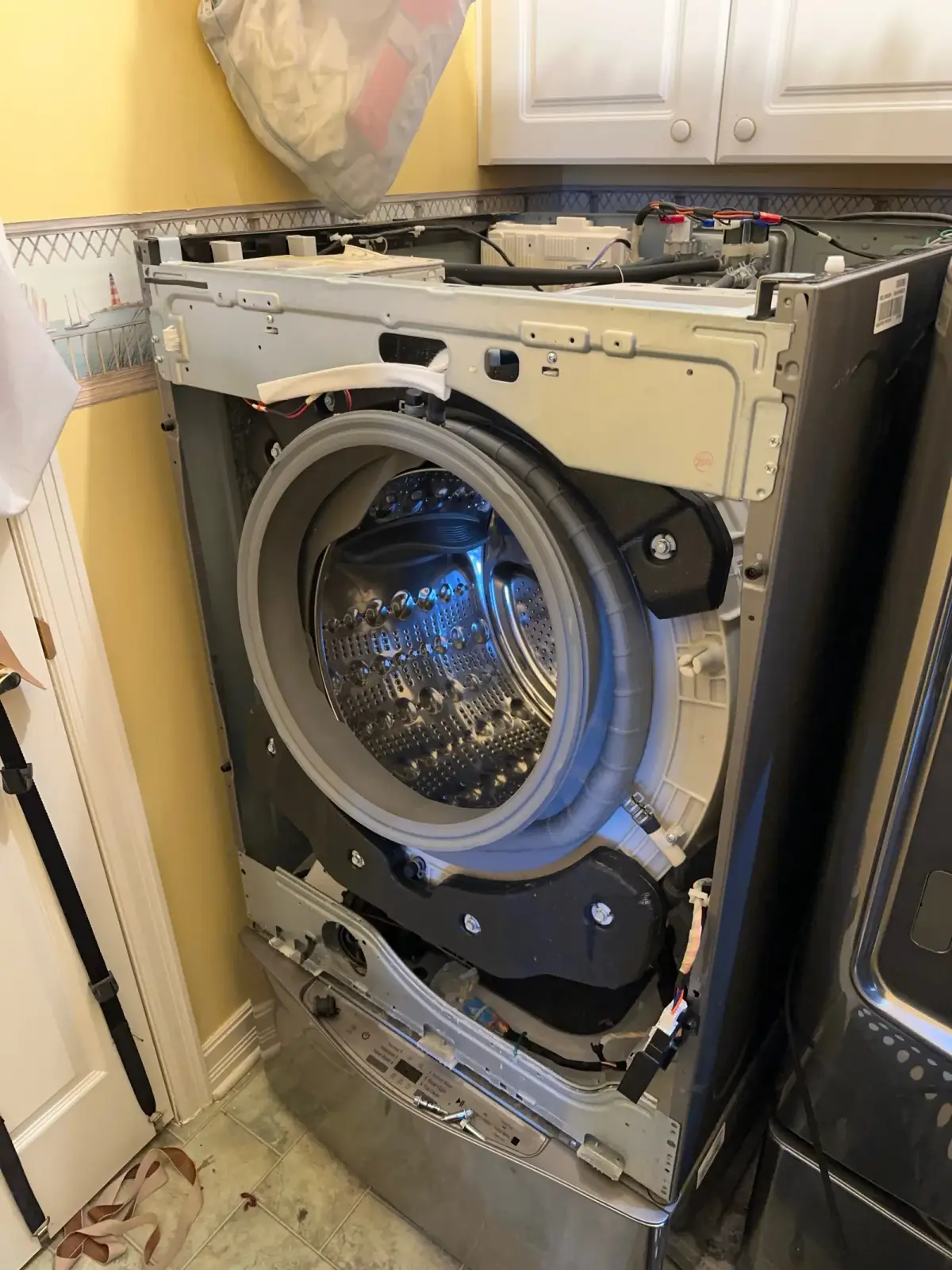
Many front-load and some top-load washers have a small access panel near the bottom front with a drain filter or pump trap. When this filter is clogged with lint, coins, or debris, water may not leave the drum at all.

3. Blocked Household Drain or Standpipe
Your washer drains into a standpipe or laundry sink. If that drain is partially blocked — often by lint buildup, soap residue, or a shared plumbing issue — water may back up into the washer or drain very slowly.
If multiple fixtures in the home are draining poorly at the same time, the problem may be outside the washer itself.
4. Faulty Drain Pump Motor
When the pump is clear but the washer still will not drain, the pump motor itself may have failed. You may hear a humming sound with no water movement, or no sound at all when the drain cycle should be running.
Pump failures are common on older washers and on units that have repeatedly run with blocked filters or hoses. This type of repair typically requires a technician to test the pump and replace it if needed.
5. Lid Switch, Door Lock, or Cycle Control Issue
Washers are designed not to drain or spin if the lid or door is not properly closed and locked. A faulty lid switch, door lock assembly, or control board can prevent the machine from advancing to the drain portion of the cycle — even if the door appears closed.
If the washer fills and washes normally but never drains or spins, this is worth mentioning when you call for service.
6. Unbalanced or Oversized Load
An severely unbalanced load can sometimes cause a washer to pause or stop before draining and spinning. Redistributing the clothes and running a spin/drain cycle may resolve this. If the problem happens on every load, a suspension, bearing, or control issue is more likely.
Safe Homeowner Checks
These checks are safe for most homeowners. Always unplug the washer before inspecting anything behind or underneath the machine.
- Check the drain hose — Pull the washer slightly forward if needed and confirm the hose is not kinked, crushed, or pulled too tight against the wall.
- Inspect the standpipe or laundry sink — Make sure the drain opening is clear and water is not backing up from another source.
- Clear the pump filter — If your washer has a front-access filter, place a shallow pan and towels underneath, then carefully open the filter per your owner's manual and remove visible debris.
- Redistribute the load — Open the lid or door, spread clothes evenly in the drum, and run a spin/drain cycle.
- Check for error codes — Note any flashing lights or codes on the display. Our washer error codes guide can help you understand what they mean.
Do not attempt to disassemble the pump, test live electrical components, or bypass safety switches. Those steps require proper tools and training.
When to Call a Washer Repair Technician
Contact a professional if:
- Water remains in the drum after basic checks
- The washer leaks while trying to drain
- You hear grinding, loud humming, or burning smells
- The same error code keeps returning
- The door or lid will not unlock with water inside
- You recently moved the washer and the problem started immediately afterward
A qualified technician can test the drain pump, wiring, and control components safely — and confirm whether repair makes more sense than replacement. We service all major washer brands across Ottawa and nearby areas.
Related Fixer Services
- Washer Repair Ottawa — professional diagnosis and same-day service options
- Dryer Repair Ottawa — if wet clothes are also a drying issue
- Washer Error Codes Ottawa — decode flashing lights and display codes
- Appliance Installation Ottawa — if you are replacing an older unit
- Contact Fixer — book online or call for help today
FAQ – Ottawa Appliance Repair
Why is there standing water in my washing machine?
Standing water usually means the washer could not complete its drain cycle. Common causes include a kinked drain hose, clogged pump filter, blocked household drain, or a failed drain pump. Start with the hose and filter, then call for service if water remains.
Can I run my washer if it did not drain?
It is best not to. Running another full cycle on top of standing water can overflow the drum, strain the pump, and leave clothes sitting in stagnant water. Clear the issue or bail out excess water before running the machine again.
How do I know if the drain pump failed?
Signs include no water movement during the drain cycle, humming without draining, repeated drain errors, or confirmed blockages removed with no improvement. A technician can test pump voltage and resistance to confirm.
Why does my front-load washer drain slowly but not fully?
Slow draining often points to a partially blocked filter, restricted hose, or partial household drain blockage. Fully blocked pumps or failed motors tend to stop drainage completely. Both deserve attention before the problem worsens.
Is washer drain repair worth it?
In most cases, yes — especially if the washer is less than 10 years old. Pump, hose, and filter repairs are usually far less expensive than replacing the entire machine. If multiple major components are failing on an older unit, we will tell you honestly when replacement may be the better option. → Learn more
Need Washer Repair in Ottawa?
Standing water in your washer will not fix itself, and delaying service can lead to leaks, odors, and worn-out pumps. Fixer Appliance Repair provides fast, local washer repair across Ottawa — from Kanata and Barrhaven to Orleans and Nepean.
Call or text: 613-413-6969
Book online: Contact us to schedule service
About the Author
Hi, I'm Michael, lead technician at Fixer Appliance Repair Inc. I've spent over 15 years diagnosing and fixing washers, dryers, fridges, and more — from clogged drain pumps to control board faults. My goal is to help Ottawa homeowners understand what they can check safely and when it's time to call a professional.
